


AI in customer service refers to the use of intelligent systems that assist customers in real time. In 2026, AI and customer service work best together as a split: AI answers routine questions instantly, routes requests and drafts replies around the clock, while people handle the complaints, exceptions and emotional moments that need judgment. Used that way, AI makes service faster without making it less human. Used to replace people outright, it tends to do the opposite.
This article explains what AI in customer service actually does, the five places it helps most, where it goes wrong, and how consumer brands in the US, UK and Australia are building a hybrid model. If you want to see how that model runs day to day, our AI in customer service page sets out how we combine AI agents with trained people.
What is AI in Customer Service?
AI in customer service is the use of artificial intelligence tools inside a support team. The tools can:
- Read and understand written language
- Recognize speech on phone calls
- Learn from past tickets, orders and help-center content
They do not replace a support team. They take on the routine and repetitive work, so the team has more time for the conversations that matter. In practice, that means:
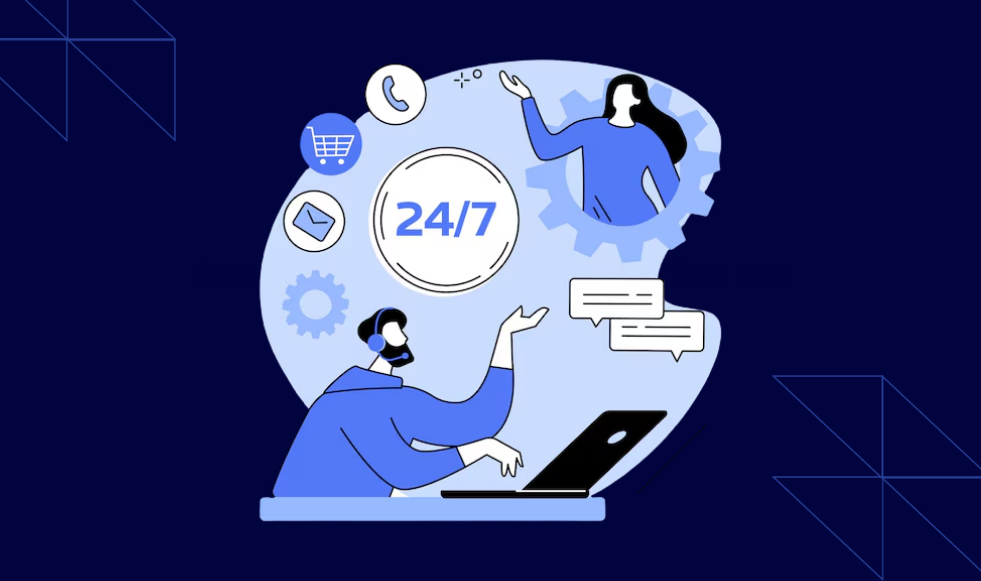
- Answering common questions through chatbots and AI agents, 24/7
- Drafting replies that an agent reviews and sends
- Routing each request to the right queue or agent
- Summarizing long threads and calls, so the next agent does not start from zero
- Tagging tickets by topic and sentiment, so managers can see what is driving volume
There is an important difference between the older chatbots most customers remember and the AI agents available now. A rule-based chatbot follows a script and fails as soon as a question does not match it. A generative AI agent reads the question, looks up the answer in your help center or order system and writes a reply in plain language. That makes it far more useful, and it also means it can be confidently wrong, which is why the guardrails later in this article matter.
What customers expect from AI and customer service in 2026
Customer expectations have moved faster than most support teams. Zendesk’s CX Trends 2026 research, based on surveys of 6,182 consumers and 5,115 business respondents across 22 countries in June 2025, found that:
- 74% of consumers now expect 24/7 service because of AI
- 81% want agents to continue the conversation without backtracking, and 74% are frustrated when they have to repeat information
- 85% of CX leaders say customers will drop brands that cannot resolve issues on first contact
- 95% of consumers expect an explanation for decisions made by AI
Read together, those numbers describe what customers want from AI: to be available at any hour, to remember what the customer already said, to fix the problem the first time, and to be honest about what it is doing. None of that is the same as wanting to talk to a bot. It is wanting service that is fast and does not waste their time.
5 Ways AI is Improving Customer Service in 2026
AI helps most where the work is high in volume and low in judgment. These are the five areas where consumer brands see the clearest benefit.
1. Cut Down Average Handle Time (AHT) with AI
AHT is the time it takes to solve a customer’s issue from start to finish. Customers want answers in a single interaction, and every repeat contact adds frustration and cost.
AI shortens that time in two ways. First, it answers simple questions outright. A customer asking where an order is, how to start a return or whether a product is back in stock can get an instant answer from an AI agent that reads the order system. Second, it speeds up the human agents. It pulls up the customer’s history, suggests a reply and summarizes the conversation afterward.
The research backs up the second point. A study of 5,179 customer support agents published by the National Bureau of Economic Research, Generative AI at Work, found that access to an AI assistant increased the number of issues resolved per hour by 14% on average, and by 34% for novice and low-skilled workers. The researchers report evidence that the tool spread the practices of the most able agents to less experienced ones.
2. AI Analyzes Your Large Volumes of Business Data
Every customer interaction creates data: a ticket, a chat transcript, a review, a social comment. For a consumer brand selling in the US, UK and Australia, reading all of it by hand is impossible.
AI can read thousands of tickets and comments and group them by theme. That makes it possible to see:
- Which products generate the most contacts, and why
- Which issues keep coming back after a policy or packaging change
- Which customers show signs of leaving, such as repeated complaints or canceled subscriptions
Those insights are useful well beyond the support team. A spike in “wrong size” tickets is a product page problem. A rise in “where is my order” contacts after a carrier change is a logistics problem. AI surfaces them in days rather than at the next quarterly review.
3. AI Bots Can Hold More Natural Conversations
Modern AI agents understand intent, not just keywords, and they can recognize tone in the words a customer uses. That lets them respond more naturally, slow down when a customer is frustrated and hand over to a person when a conversation turns emotional.
This is also where caution matters most. Sentiment detection is a signal, not an understanding of how someone feels. The best use of it is to decide when a person should step in, not to have the AI imitate empathy for longer than it should.
4. One Conversation Across Every Channel
Customers do not stay on one platform. Someone may ask a question on Instagram, check your website later and finish the conversation on WhatsApp or email. If those conversations are not connected, the customer has to repeat themselves every time, which the Zendesk research shows is one of the biggest sources of frustration.
AI helps link interactions across channels into a single view, so any agent, human or AI, can see the full history. The result is fewer dropped conversations and less time spent asking customers for information they already gave. Our messaging support team works this way across chat, social and messaging apps.
5. Make Your Customers Feel Special with CX Personalization
No customer wants to feel like a ticket number. AI can personalize service using what the brand already knows: past orders, preferred channel, previous contacts and the tone of earlier conversations. In practice, that means:
- Greeting a returning customer with the context of their last order
- Recommending a replacement or accessory based on what they bought
- Flagging a customer with several recent problems so an agent reaches out first
- Offering a retention path to a subscriber who is about to cancel
Done with care, this is what customers mean when they ask brands to “remember” them. Done carelessly, it feels intrusive, so keep personalization tied to the customer’s own history with your brand.
Concerned About Human Touch? What Gets Lost (and What Doesn’t)
AI is not good at everything, and the failures are public. In 2024 a Canadian tribunal ordered Air Canada to compensate a customer after its website chatbot gave wrong advice about bereavement fares, as CBC reported. The airline argued the chatbot was responsible for its own actions. The tribunal disagreed, saying it makes no difference whether information comes from a static page or a chatbot. The lesson for any brand is simple: whatever your AI says, your company said.
Klarna offers a second lesson. After announcing in 2024 that its AI assistant was doing the work of 700 agents, the company changed course in 2025 and began recruiting people again, so customers would always have the option to speak to a human, according to CX Dive. Its CEO said it is critical to be clear with customers that there will always be a human if they want one.
Here is what tends to get lost when AI runs alone, and what stays strong.
| What gets lost with AI alone | What stays strong, and often improves, with AI |
|---|---|
| Empathy in hard moments, such as a lost parcel before a birthday or a disputed charge | Speed of first response, at any hour |
| Judgment on exceptions, such as a refund outside policy for a loyal customer | Consistent answers to routine questions |
| Accountability, when the AI states a policy that does not exist | Order tracking, returns and account changes without a queue |
| Trust in high-stakes decisions, such as large purchases or serious complaints | Tagging and summarizing every conversation |
A “Hybrid Model” is the Perfect Approach
The pattern that works in 2026 is AI and people with clear jobs. AI takes the routine, repetitive work. People take what machines cannot do well: showing empathy, solving unusual problems and making judgment calls.
A workable hybrid model has five parts.
- Decide what AI owns. Start with high-volume, low-risk contacts: order status, return steps, store and shipping policies, password resets. Leave refunds outside policy, complaints and anything involving money or safety with people.
- Ground the AI in your own content. An AI agent should answer from your help center, policies and order data, not from general knowledge. Keep that content current, because the AI will repeat whatever it finds.
- Make the human path obvious. Customers should be able to reach a person in one step, and the person should see everything the AI already discussed.
- Check the AI’s work like an agent’s. Review a sample of AI conversations every week for accuracy, tone and whether handoffs happened when they should.
- Measure the outcome, not the deflection. A bot that closes a conversation without solving the problem creates a repeat contact. Track resolution and satisfaction for AI and human conversations separately.
Most customers are comfortable with this balance. They are happy to let AI answer a simple question at midnight, and they want a person when the issue is emotional or high-stakes. The brands that get it right use AI to make their people more available, not to make them disappear.
Get the Perfect Balance of AI and Humans in Customer Support with Atidiv
Building that balance in-house means buying and configuring the AI, writing the knowledge base, training agents to work alongside it and checking quality on both. Many consumer brands would rather have a partner run it.
Atidiv runs outsourced support for consumer brands in the US, UK and Australia, with AI on the repeat questions and trained people on the conversations that need judgment. Across our customer experience work we report:
- A 98% average QA score and a 4.8 average CSAT
- 200,000+ customer experiences delivered
- 30 to 80% of repeat queries automated, with QA guardrails
- Up to 60% cost saving against an in-house team
- SOC 1, GDPR, CCPA and ISO compliance
See how it works on our AI customer support outsourcing page, read about our AI chatbot for customer service, or contact us to talk it through.
Frequently asked questions
Can I replace my customer service team with AI tools?
No. AI is best used as support for a team, not a replacement for one. It can take over repetitive work such as FAQs, delivery updates, order cancellations and refund status checks. That frees your people for complex and emotional issues, which is where customer loyalty is won or lost. Companies that pushed hardest on automation, such as Klarna, have moved back toward keeping a human option.
How does AI and customer service work together day to day?
AI usually handles the first step: it greets the customer, answers routine questions and collects details such as the order number. If the issue needs a person, it hands the conversation over with a summary, so the customer does not repeat themselves. Behind the scenes, AI also drafts replies for agents, tags tickets and summarizes calls.
How much money can I save by using AI in customer service?
It depends on how much of your volume is routine. The savings come from AI resolving simple contacts without an agent and from agents working faster with AI assistance. The NBER study of support agents found a 14% average increase in issues resolved per hour with an AI assistant. Measure your own contact mix before estimating savings, and count the cost of setup, content upkeep and quality checks. Brands that outsource a hybrid AI-and-agent team to us save up to 60% against an in-house team.
What happens if customers don’t like AI interactions?
Design for a smooth handoff. AI handles the first step and passes the full context to a person when needed, and customers can ask for a person at any time. Review conversations where customers asked for a human, because they show you what the AI should stop trying to handle.
Is my business responsible for what an AI chatbot tells customers?
Yes, in practice. In the Air Canada case, a tribunal held the airline responsible for its chatbot’s wrong advice and rejected the argument that the chatbot was a separate entity. Treat every AI answer as your company’s answer, and check its accuracy the way you would check an agent’s.
Is 2026 the right time to adopt AI in customer service?
For most consumer brands, yes, as long as it is adopted in stages. Customers already expect round-the-clock service and fast answers. Start with a narrow set of routine contacts, measure resolution and satisfaction, and expand only when the results hold up.

Ben has a strong expertise in combining data and strategic thinking to help businesses that are in the process of growth, plan smarter, grow faster and make better business decisions. He has experience in economic research and managing operations, providing him with a broad & rounded analytical perspective from many angles. Curiosity is coupled with logical reasoning. Therefore he enjoys tackling complex issues and converting analysis/insights into action.