


An AI call monitoring system automatically reviews 100% of customer calls instead of checking only a small sample. It gives businesses complete visibility into service quality and allows managers to identify issues and monitor trends from every interaction.
Studies show that most businesses review only 2 to 5% of customer calls. Manual QA teams can review only a small sample of customer conversations, leaving 95 to 98% of interactions without any quality evaluation.
This is one of the biggest reasons businesses are replacing traditional call monitoring with AI-powered Quality Assurance (QA). This system automatically reviews 100% of customer interactions and reduces manual QA costs.
In this article, you will learn what AI call monitoring is, how it works, the technologies behind it, why businesses are replacing manual call reviews with AI in 2026, and the various AI QA coverage benefits.
What Is AI Call Monitoring?
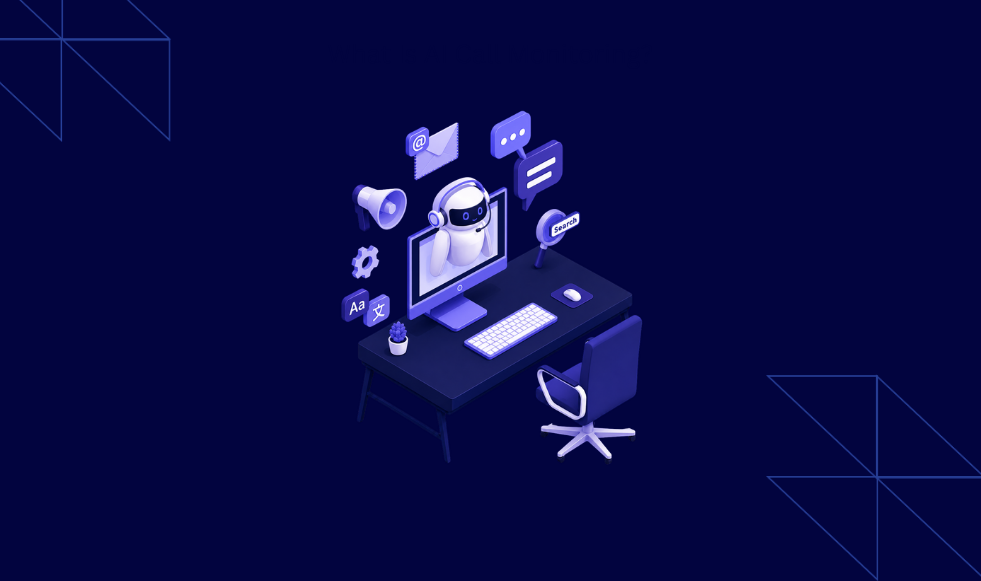
AI call monitoring is a technology that uses artificial intelligence to listen to, convert, analyze, and evaluate customer phone calls. It uses tools such as:
- Automatic Speech Recognition (ASR) to convert speech into text
- Natural Language Processing (NLP) to interpret conversations, and
- Machine Learning to identify patterns and improve its analysis over time.
Traditional call monitoring depends on quality analysts who manually review only a small number of recorded calls. As a result, many customer interactions remain unchecked. AI call monitoring works differently and is considered “100 percent interaction QA”.
It reviews every call automatically instead of checking only a small sample. AI call monitoring offers full coverage and can:
- Identify issues
- Measure agent performance
- Detect customer sentiment
- Check whether agents follow company policies, and
- Generate reports without manual effort.
VPs or senior managers of D2C companies may realize that call recording itself is not new. Businesses have recorded customer calls for many years. The difference is what happens after the recording. AI does more than store conversations. It analyses every call, identifies recurring issues, detects trends across thousands of conversations, and alerts managers when immediate attention is needed.
This offers growing D2C companies full interaction QA coverage and complete visibility into customer interactions.
What are the Core Components of an Automated QA Call Center?
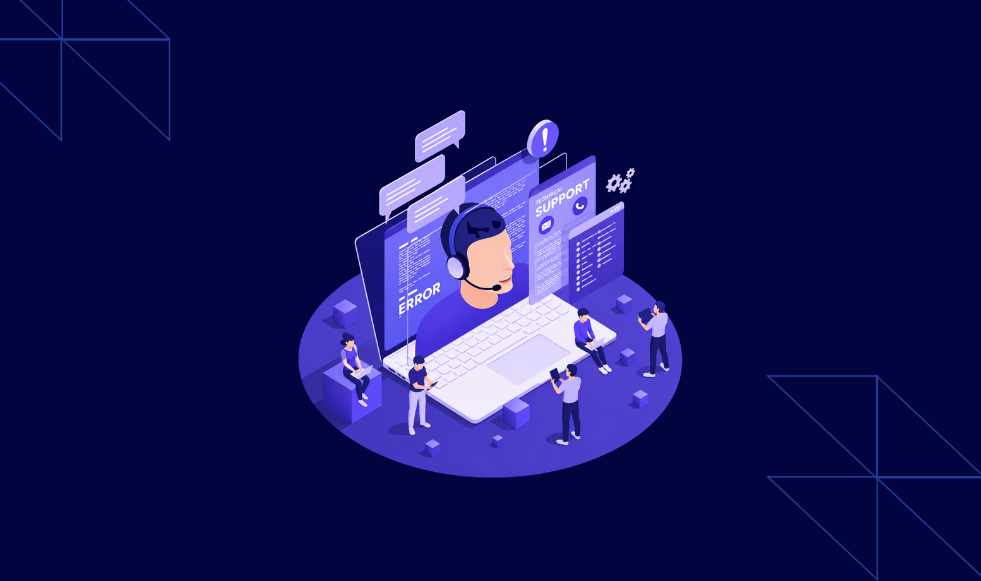
An automated QA call center is generally based on an advanced AI call monitoring system. This system operates on several technologies and supports 100 percent interaction QA. Consequently, managers get a complete view of agent performance, customer experience, and compliance.
For more clarity, let’s check out the four major components of AI call monitoring full coverage:
| Component | What It Does |
| Automatic Speech Recognition (ASR) |
|
| Natural Language Understanding (NLU) |
|
| Sentiment Analysis |
|
| Integration Architecture |
|
4 Major AI QA Coverage Benefits 2026
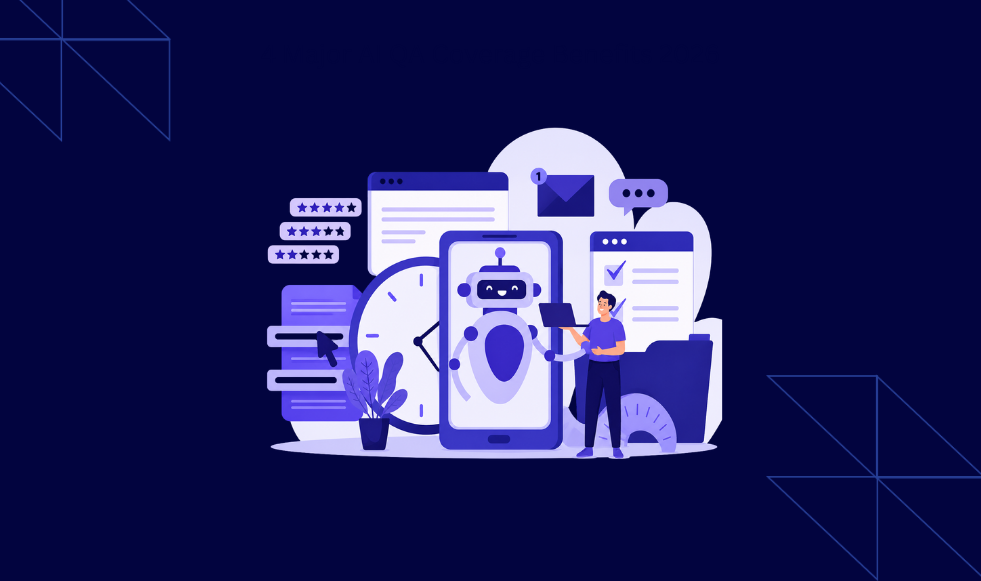
When the above four components work together, AI call monitoring can analyze every customer conversation from beginning to end. This allows growing D2C companies to automate reviews, identify service issues, and support 100 percent interaction QA instead of relying on manual checks of a small number of calls.
Let’s understand the AI QA coverage benefits in detail:
1. Every Customer Call Receives a Quality Review
Traditional quality assurance depends on human reviewers who can only evaluate a small number of recorded calls. That’s because listening to every conversation takes significant time.
As a result, many service issues, compliance gaps, and coaching opportunities remain unnoticed. AI call monitoring removes this limitation by reviewing every customer interaction automatically. Additionally, it can also:
- Convert conversations into text
- Evaluate the discussion against pre-defined quality standards, and
- Generate a score for each call.
With 100 percent interaction QA, every customer conversation becomes part of the quality review process instead of only a small sample. This gives managers a complete picture of agent performance across the entire team.
Some major benefits include:
- Every call is reviewed instead of a selected sample.
- All agents are evaluated using the same quality standards.
- Compliance issues become easier to identify.
- Managers receive more complete performance data for coaching and reporting.
This approach reduces the risk of making decisions based on limited information and provides a more accurate view of contact center performance.
2. Managers Can Respond While the Call Is Still Happening
Manual quality assurance only begins after a call has ended. By the time a reviewer identifies a problem, the customer interaction is already over. This leaves no opportunity to improve that specific experience.
An automated QA call center changes this by analyzing conversations as they take place. It can detect negative customer sentiment, extended silence, repeated objections, missed compliance statements, or other predefined events during an active call.
With 100 percent interaction QA, supervisors receive visibility into every live conversation rather than waiting for a sample of recordings to be reviewed later. This allows managers to identify situations that may require immediate attention.
3. Hidden Trends Become Visible Across Every Conversation
When only a small percentage of calls are reviewed, recurring customer issues may remain unnoticed. For example,
- A complaint that appears in several hundred conversations may never appear in the limited sample selected for manual review.
AI call monitoring offers full coverage and examines every conversation. Consequently, it can identify repeated customer concerns, common product questions, recurring complaints, policy violations, and agent performance trends. Some common examples of trends AI can identify include:
- Frequently reported product issues.
- Common reasons customers contact support.
- Policies that agents often fail to follow.
- Topics that lead to customer dissatisfaction.
- Coaching needs to be shared across multiple agents.
4. More Time for Coaching Instead of Manual Reviews
Manual call evaluations require quality analysts to spend many hours listening to recordings, completing scorecards, and preparing reports. This limits the amount of time available for coaching agents and improving customer service.
AI call monitoring performs the review process automatically, including transcription, quality scoring, and issue detection. Managers receive organized reports without manually reviewing every recording. Due to 100 percent interaction QA, businesses spend less time selecting calls for review because every interaction has already been evaluated.
Why Businesses Are Replacing Manual Call Reviews With AI Call Monitoring in 2026?
For many years, contact centers have depended on manual quality assurance (QA), where quality analysts listen to only a small sample of customer calls. This approach exists because reviewing every call manually is not possible. Studies show that in most contact centers, only 2% to 5% of total calls are reviewed.
This creates several business problems. For example:
- 62% of QA managers admit that the calls they review do not accurately represent the entire call volume.
- Reviewers agree only 78% of the time on “objective criteria” and only 62% of the time on “subjective areas” such as tone or empathy.
Additionally, agents receive feedback several days or even weeks after the original call. During that period, the same mistake may appear in hundreds of additional conversations. With 100 percent interaction QA, every customer conversation is evaluated instead of relying on a small sample. This gives managers complete visibility into customer interactions.
Additionally, some more reasons AI QA is replacing sample-based call monitoring are:
1. AI Reviews Every Call Without Increasing QA Costs
One of the biggest reasons businesses are adopting AI call monitoring is its ability to evaluate every customer conversation without requiring a large quality assurance team. AI automatically converts speech into text and analyzes the conversation using Natural Language Processing (NLP) and Large Language Models (LLMs). Lastly, it scores each interaction based on predefined quality standards.
The difference between manual QA and AI is significant. Let’s understand in detail:
| Metric | Manual QA | AI-Powered QA |
| Call Coverage | 2 to 5% | 100% |
| Cost Per Evaluated Call | $8 to $15 | $0.05 to $0.30 |
| Reviewer Consistency | 20 to 30% disagreement | The same AI model applies the same standards to every call |
| Time to Identify Violations | Around 14 days | Same day or during the call |
| Feedback to Agents | 3 to 7 days | Real-time or within 24 hours |
These numbers show that AI does more than increase the number of calls reviewed. It also reduces the cost of quality assurance while applying the same evaluation standards across every interaction. With 100 percent interaction QA, businesses move from reviewing a small sample of conversations to monitoring the entire customer experience.
2. AI Helps Reduce Compliance Risks Before They Become Costly Problems
For businesses operating in industries such as banking, financial services, healthcare, insurance, or debt collection, compliance is one of the most important parts of customer service. Missing even one serious violation can result in regulatory action, financial penalties, or damage to the company’s reputation.
Manual QA cannot review every call, so many compliance issues remain undetected. Research highlights the scale of this challenge:
- 47% of compliance violations detected by AI occurred on calls that would never have been selected for manual review.
- 89% of regulators across India, the United States, and the United Kingdom now accept AI-generated audit trails as preferred evidence over sample-based reviews.
- On average, organizations record 2.3 PCI-DSS violations per 1,000 calls reviewed.
- Healthcare organizations experience approximately 1.1 to 1.8 HIPAA breaches per 1,000 calls, many of which remain unnoticed with manual sampling.
The potential solution? AI identifies repeat compliance violations within 24 to 48 hours, while manual QA may require 4 to 6 weeks before the same pattern becomes visible. With 100 percent interaction QA, every customer conversation becomes part of the compliance review process. This allows businesses to detect policy violations early, investigate recurring issues, and maintain complete audit records.
3. Better Customer Service Starts With Better Visibility Into Every Conversation
AI call monitoring is not limited to identifying mistakes. It also provides detailed information about customer experience and agent performance. Since every conversation is analyzed, businesses can identify service trends that are difficult to detect through manual sampling.
Let’s see what research shows regarding business improvements after adopting AI-powered QA:
- Contact centers using complete AI coverage report customer satisfaction (CSAT) improvements of 5 to 15 percentage points within 90 days.
- AI-based coaching, built around actual customer conversations, improves agent performance 40% to 60% more than traditional monthly feedback sessions.
- Generative AI supports more than 50% savings in QA costs, 25% to 30% improvements in agent productivity, and an additional 5% to 10% increase in CSAT.
Besides, AI also identifies long periods of silence during calls. Research shows that when dead air exceeds 15% of a conversation, customer satisfaction may decline by 12 to 18 percentage points.
In this way, rather than reviewing isolated calls, an automated QA call center examines conversation flow, customer sentiment, recurring objections, and agent behavior across the entire contact center.
Want to Use AI in Your CX Department? Partner with Atidiv and Save Up to 65% in Operational Costs
So, now you know what AI call monitoring is and how it delivers 100% coverage across customer conversations. If we were to revise, AI call monitoring uses technologies such as Automatic Speech Recognition (ASR), Natural Language Understanding (NLU), and sentiment analysis to automatically transcribe, analyze, and evaluate every customer call.
Unlike traditional quality assurance, which reviews only a small sample of conversations, AI examines every interaction and offers 100 percent interaction QA. That is why many businesses are replacing manual call reviews with AI call monitoring in 2026. Some common reasons are:
- Reviews 100% of customer calls instead of only 2 to 5% samples.
- Delivers consistent quality scores without reviewer bias.
- Detects compliance risks before they become major issues.
- Provides coaching opportunities based on every customer interaction.
- Identifies recurring customer problems and service trends.
- Reduces QA costs while improving customer satisfaction and agent performance.
If you are planning to introduce AI into your customer support operations, Atidiv can help. We are CX specialists serving 70+ global clients with over 16 years of experience in customer support and contact center operations. Our AI Customer Support Outsourcing goes far beyond basic automation. We offer intelligent support systems that analyze customer behavior, predict customer needs, and improve with every interaction.
Our platform also includes intelligent routing and AI Agent Assist capabilities. In addition, our predictive analytics engine identifies “recurring call drivers” and predicts potential issues before they affect service quality.
Learn how Atidiv’s intelligent automation can improve your quality assurance and boost CX. Book a free consultation today.
100 percent Interaction QA FAQs
1. How long does it take to achieve full call coverage with AI QA?
Many businesses replacing manual sampling with complete call reviews see results within a few months. According to industry data, 78% of contact centers using AI QA achieve 100% call coverage within 90 days.
2. Why are more businesses adopting AI call monitoring in 2026?
AI adoption continues to grow in 2026 as several D2C companies want complete visibility into customer conversations. Industry reports show 68% of contact centers plan to deploy AI QA by the end of 2026.
3. Can AI replace my quality assurance team?
As per general industry understanding, AI may support your QA team rather than replacing it. Most businesses prefer a “hybrid approach”, where AI reviews every customer call automatically, while QA managers use the insights for coaching, compliance reviews, and performance improvement.

Ayushi leads Customer Experience services at Atidiv with a strategic/operations-focused mindset. Her primary objective is to increase how well businesses deliver service and retain customers. She evaluates customers' journeys through marketing impact, performance metrics, and gaps to develop improved systems and processes. With a reputation for curiosity and structured thought processes.